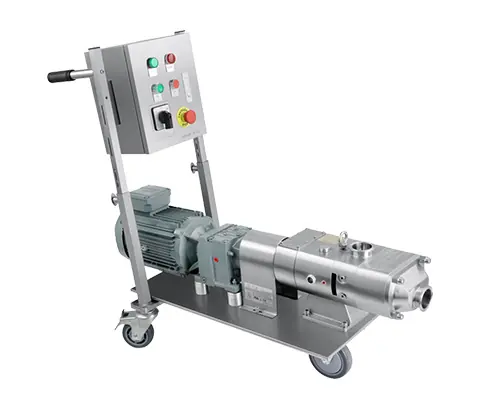
Sanitary Twin-Screw Pumps

● 3-A SANITARY DESIGN● EHEDG CERTIFIED PATH● FDA-COMPLIANT MATERIALS● ASME-BPE● 316L ELECTROPOLISHED FINISH● FREE PUMP SIZING IN 24 H ● 3-A SANITARY DESIGN● EHEDG CERTIFIED PATH● FDA-COMPLIANT MATERIALS● ASME-BPE● 316L ELECTROPOLISHED FINISH● FREE PUMP SIZING IN 24 H
Home/Pumps/Twin-Screw Pump
Positive Displacement · Transfer + CIP

Sanitary Twin-Screw Pumps

One hygienic pump for two jobs: gentle product transfer at low speed, then high-velocity CIP through the same line. Self-priming, particle-friendly and built to 3-A and EHEDG hygienic design — for sauces, dairy, fruit prep, cosmetics and pharma media.

Request a Quote → Download datasheet Talk to an engineer  +1 (000) 000-0000
≤ 485GPM (110 m³/h)
≤ 290psi (20 bar)
10–3500rpm
≤ 23mm solids
3-ANo.1579 · FDA

One pump for product transfer and CIP

A sanitary twin-screw pump moves product gently at low speed, then ramps up to drive high-velocity CIP fluid back through the same line — so one pump does the work of two. Two intermeshing screws carry product axially in sealed chambers, with no metal-to-metal contact in the wetted zone. That makes it self-priming, gentle on shear-sensitive and particle-laden product, and fully CIP- and SIP-cleanable. Tell us your duty point and we will size the right model — free, within 24 hours. New to screw pumps? Read how a twin-screw pump works.
Showing 6 representative models Sort by
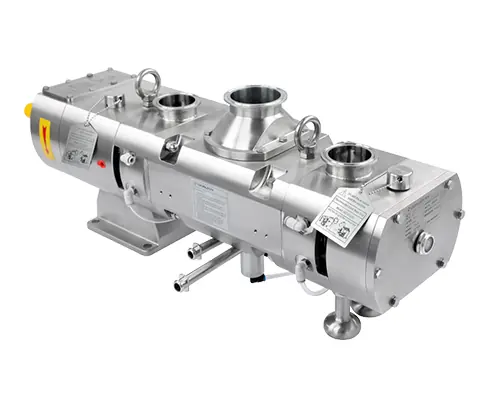
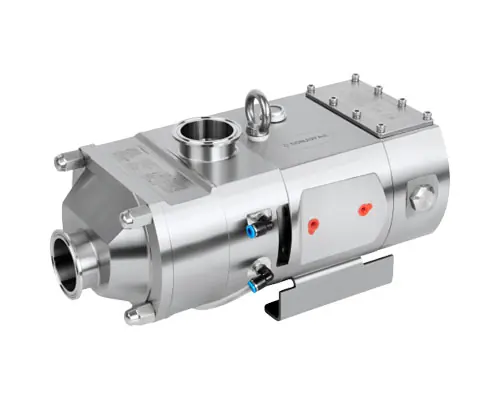
StandardDONJOY sanitary twin-screw pump standard model

TS Series

Max flow
485 GPM (110 m³/h)
Max pressure
290 psi (20 bar)
Speed
10–3500 rpm
Solids
≤ 23 mm (0.9 in)
Material
316L · Ra ≤ 0.4 µm
Request quote
Twin-headDONJOY twin-head twin-screw pump

Twin-Head TS

Max flow
485 GPM (110 m³/h)
Layout
Two screw sets, one drive
Speed
10–3500 rpm
Duty
Dual-stream / high flow
Material
316L EP
Request quote
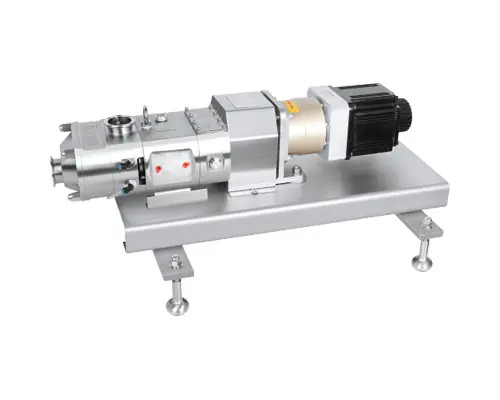
Direct driveDONJOY direct-drive twin-screw pump

Direct-Drive TS

Max flow
485 GPM (110 m³/h)
Max pressure
290 psi (20 bar)
Drive
Motor direct-coupled
Benefit
Compact · fewer parts
Material
316L
Request quote
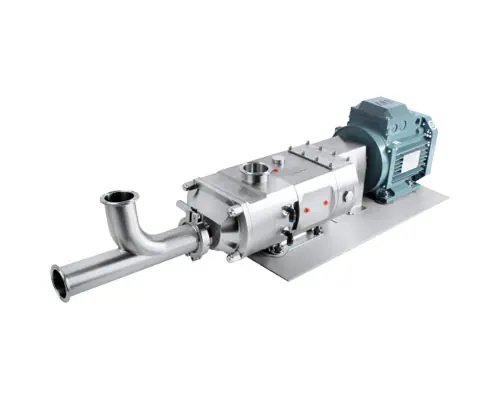
Servo · dosingDONJOY servo-driven twin-screw dosing pump

Servo TS

Drive
Servo motor
Speed
Instant-change 10–3500 rpm
Duty
Precise dosing / filling
Finish
Ra ≤ 0.4 µm
Cert
3-A · FDA
Request quote
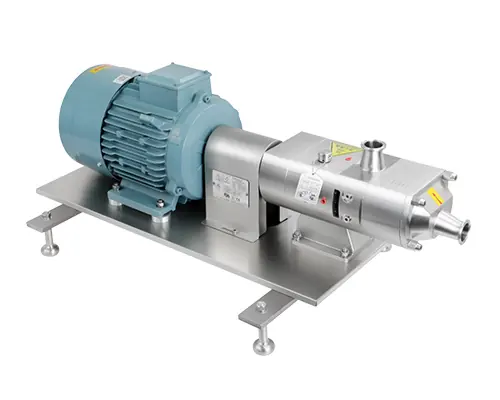
Transfer + CIPDONJOY twin-screw pump for combined transfer and CIP duty

TS — Transfer + CIP

Max flow
485 GPM (110 m³/h)
Speed
Slow product · fast CIP
Feature
Self-priming
Duty
One pump, both jobs
Material
316L EP
Request quote
High-pressureDONJOY twin-screw pump with relief valve and VFD

TS + Relief / VFD

Max pressure
290 psi (20 bar)
Protection
Relief valve / VFD cutout
Speed
10–3500 rpm
Duty
Deadhead-safe
Material
316L EP
Request quote

Specs reflect the DONJOY twin-screw range we reference (3-A-02-11 No.1579, FDA 177.2600, CE-MD): up to 485 GPM (110 m³/h), 290 psi (20 bar) and 10–3,500 rpm, carrying soft solids up to about 23 mm (0.9 in). Twin-head, direct-drive and servo drives, seals, connections, surface finish and the supply source are matched to your specification and may be made to order.

Hygienic standards

Built to the standards your auditor checks

Every twin-screw pump is specified to crevice-free, drainable hygienic design with documented material traceability — built to 3-A-02-11 (No.1579), FDA 177.2600 and CE-MD, with 316L wetted parts electropolished to Ra ≤ 0.4 µm for clean CIP/SIP performance.

3-A SanitaryEHEDG designFDA materialsASME-BPE316L · Ra ≤ 0.8 µm
Compare standards →

Twin-screw pump FAQs

The questions buyers and engineers ask most before specifying a hygienic twin-screw pump.

What is a twin-screw pump?
A twin-screw pump is a positive-displacement pump that moves product with two intermeshing screws turning on parallel shafts. The screws trap fluid in sealed chambers and carry it smoothly from inlet to outlet. Because the screws never touch each other or the casing, flow is gentle, low-pulsation and self-priming — which makes it well suited to hygienic transfer.
How does a twin-screw pump work?
Two timed screws rotate in opposite directions inside a close-fitting casing. As they mesh, they form sealed cavities that move axially from suction to discharge, carrying a fixed volume each revolution. Timing gears keep the screws synchronized so there is no metal-to-metal contact in the product zone. The result is steady, positive-displacement flow with very low shear.
What is a twin-screw pump used for?
Twin-screw pumps do two jobs in one unit: gentle product transfer and high-velocity CIP/SIP cleaning. They suit shear-sensitive, viscous or particle-laden product — sauces, soups, fruit prep, pet food, cosmetics and pharma media — and are widely chosen where a single pump must both move product and clean the line.
What is the difference between a twin-screw pump and a lobe pump?
Both are gentle positive-displacement pumps. A twin-screw pump has a much wider speed range (up to 3,500 rpm), higher pressure capability and true dual-duty — it runs slow for product and fast for CIP. A rotary lobe pump is simpler and lower-cost for steady transfer. Choose twin-screw when you need one pump for both process and cleaning, or higher pressure.
Twin-screw vs progressive cavity pump — which should I choose?
A progressive cavity pump handles very high viscosity and abrasives well, but it cannot run fast or dry and its rubber stator wears. A twin-screw pump runs faster, cleans itself with CIP, carries particles intact and has no stator to replace — though it costs more up front. For hygienic food, dairy and pharma duty, twin-screw is usually the more flexible, lower-maintenance choice.
What are the disadvantages of a twin-screw pump?
A twin-screw pump costs more than a lobe or centrifugal pump and is more complex to rebuild, because of its tight screw clearances and timing gears. Like any positive-displacement pump, it can build dangerous pressure if a downstream valve closes, so a relief valve or VFD cutout is needed. For thin, water-like fluids at high flow, a centrifugal pump is cheaper.
Is a twin-screw pump positive displacement?
Yes. Each revolution displaces a fixed volume, so flow stays steady and roughly proportional to speed regardless of discharge pressure. That is why a twin-screw pump holds flow against rising back-pressure and self-primes, unlike a centrifugal pump.
Can one twin-screw pump handle both transfer and CIP?
Yes — this is its signature advantage. The wide speed range lets it run slowly for gentle product transfer, then speed up to deliver the high flow and velocity CIP needs to scour the line. One pump replaces a separate transfer pump and CIP pump, saving space, cost and a second seal to maintain.
Can a twin-screw pump run dry?
Briefly, and better than most positive-displacement pumps, because the screws do not touch. But sustained dry running overheats the seals and is not recommended. For frequent dry-run or line-clearing duty, specify the seal and material options designed for it.
What viscosity and particle size can a twin-screw pump handle?
Twin-screw pumps move thin liquids up to high-viscosity product, and the large cavities carry soft solids and particles up to about 23 mm (0.9 in) intact. Exact limits depend on screw geometry and speed, so share your product details and we will confirm what fits.
What is the maximum flow and pressure of a sanitary twin-screw pump?
The hygienic range we reference reaches about 485 GPM (110 m³/h) and 290 psi (20 bar), with speeds from 10 to 3,500 rpm. That is the type’s general capability — your actual model is sized to your duty point of flow, pressure, viscosity and temperature.
Is a twin-screw pump good for shear-sensitive product?
Yes. With no metal-to-metal contact and low slip at the right speed, it carries emulsions, live-culture dairy, creams and delicate particulates without breaking them down. Run it at the lowest speed that meets your flow to keep shear to a minimum.
What hygienic standards does a twin-screw pump meet?
Hygienic twin-screw pumps are built to 3-A and EHEDG design principles, with FDA-compliant materials and 316L stainless electropolished to Ra ≤ 0.4 µm. The range we reference is built to 3-A-02-11 (No.1579), FDA 177.2600 and CE-MD. The exact certification path depends on your market and audit.
How quickly can you size and quote a twin-screw pump?
Send your duty point — flow, pressure, fluid, viscosity, particle size and temperature — and we return a sized selection and a budgetary quote within one business day. Supplier-neutral, matched to your process, not to one brand.

About sanitary twin-screw pumps

Twin-screw pumps are positive-displacement pumps: two intermeshing screws displace a fixed volume each revolution, so flow stays steady and roughly proportional to speed regardless of discharge pressure. What sets them apart is range. A twin-screw pump runs from a slow crawl to 3,500 rpm, so one unit can transfer product gently and then drive high-velocity CIP through the same line — the work of two pumps in one.

Why hygienic processors choose twin-screw pumps

Because there is no metal-to-metal contact in the product zone, the pump runs clean, cool and low-shear, carrying emulsions, live-culture dairy and soft particulates intact. It is strongly self-priming, handles entrained gas, and its open, drainable geometry cleans in place. The 316L electropolished wetted parts meet the crevice-free requirements of 3-A and EHEDG hygienic design.

Matching the pump to your process

The right selection balances flow, pressure, viscosity, particle size, shear sensitivity and your cleaning regime. Because it is a positive-displacement pump, flood the suction on viscous fluids and fit a relief valve or VFD cutout so it cannot deadhead against a closed valve. If your fluid is thin and water-like, compare a sanitary centrifugal pump; for simple steady transfer, compare a rotary lobe pump. Not sure? Send your duty point and our engineers will size it free.

Not sure which twin-screw pump fits?

Send your duty point — sized free in 24 hours

Request a Quote →