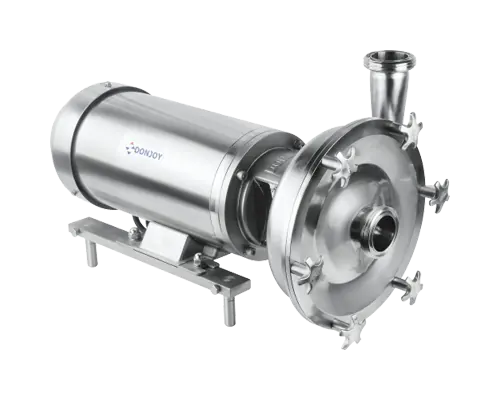
Sanitary Centrifugal Pumps

● 3-A SANITARY DESIGN● EHEDG CERTIFIED PATH● FDA-COMPLIANT MATERIALS● ASME-BPE● 316L ELECTROPOLISHED FINISH● FREE PUMP SIZING IN 24 H ● 3-A SANITARY DESIGN● EHEDG CERTIFIED PATH● FDA-COMPLIANT MATERIALS● ASME-BPE● 316L ELECTROPOLISHED FINISH● FREE PUMP SIZING IN 24 H
Home/Pumps/Centrifugal Pump
High-Flow · Low-Viscosity

Sanitary Centrifugal Pumps

The efficient workhorse for thin, low-viscosity hygienic fluids — milk, water, beer, wort and CIP solution. High flow at low cost, fully clean-in-place, and built to 3-A and EHEDG hygienic design.

Request a Quote → Download datasheet Talk to an engineer  +1 (000) 000-0000
≤ 8,800GPM (2000 m³/h)
≤ 919ft head (280 m)
302 °Fmax temp (150 °C)
316LElectropolished
3-AEHEDG design

Move thin, hygienic fluids fast — and clean in place

A sanitary centrifugal pump is the efficient choice for thin, water-like fluids. A spinning impeller adds velocity to the liquid, and the casing turns that velocity into flow and pressure. It moves milk, water, beer, wort and CIP solution at high flow and low cost. For low-viscosity duty it beats positive-displacement pumps on price and efficiency. Tell us your duty point and we will size the right model — free, within 24 hours. Not sure which type fits? Compare it with a rotary lobe pump.
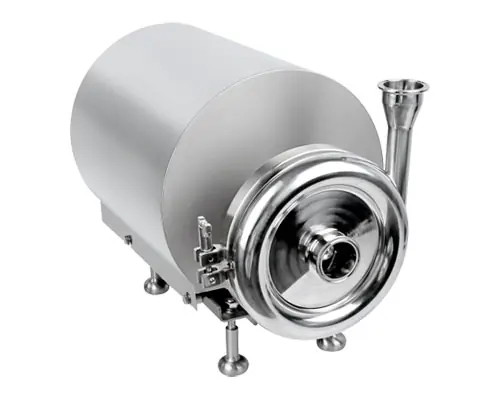
Showing 6 representative models Sort by
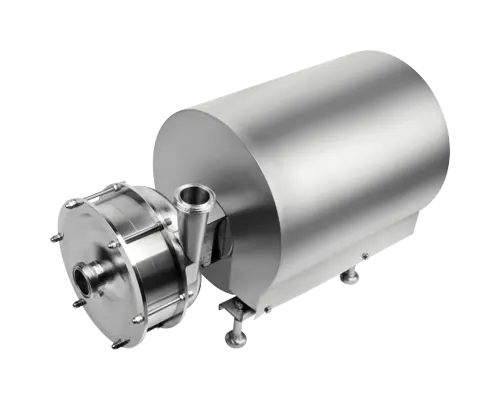
Open impeller · transferDONJOY CLX sanitary centrifugal pump

CLX Series

Max flow
616 GPM (140 m³/h)
Max head
230 ft (70 m)
Max temp
284 °F (140 °C)
Power
1.1–30 kW
Material
316L EP · open impeller
Request quote
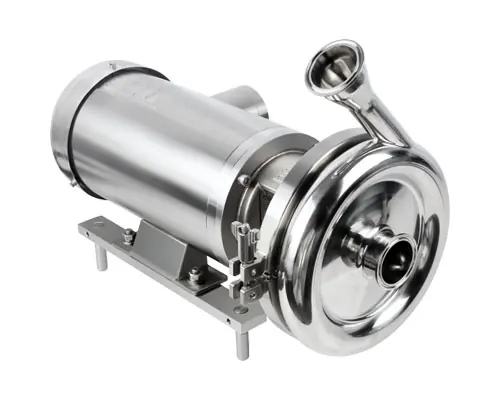
Multistage · high headDONJOY DLX multistage sanitary centrifugal pump

DLX Multistage

Max flow
352 GPM (80 m³/h)
Max head
919 ft (280 m)
Stages
Multistage in series
Connection
Tri-Clamp · DIN
Material
316L EP
Request quote
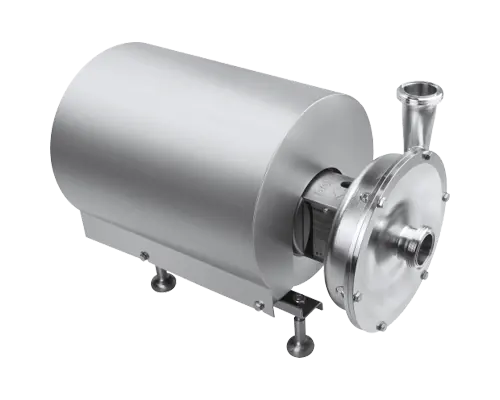
High-flowDONJOY MLX high-flow sanitary centrifugal pump

MLX High-Flow

Max flow
8,800 GPM (2000 m³/h)
Max head
131 ft (40 m)
Duty
Bulk transfer · CIP supply
Connection
DIN 11851
Material
316L EP
Request quote
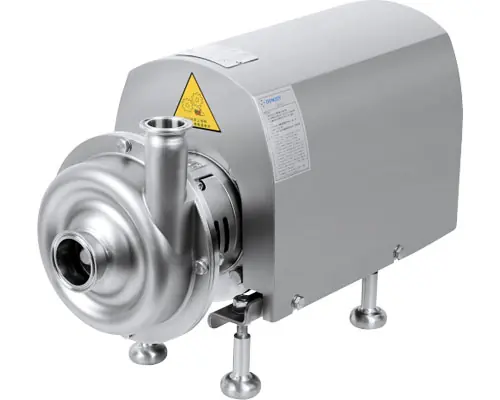
Self-priming · CIPDONJOY ZLX self-priming sanitary centrifugal pump

ZLX Self-Priming

Max flow
220 GPM (50 m³/h)
Max head
151 ft (46 m)
Suction lift
26 ft (8 m)
Drive
VFD · CIP return
Material
316L EP
Request quote
Closed impeller · economyDONJOY BS closed-impeller sanitary centrifugal pump

BS Closed-Impeller

Max flow
264 GPM (60 m³/h)
Max head
131 ft (40 m)
Impeller
Closed · efficient
Connection
Tri-Clamp
Material
316L
Request quote
All-stainless · asepticDONJOY SLX all-stainless aseptic sanitary centrifugal pump

SLX All-Stainless

Max flow
616 GPM (140 m³/h)
Finish
Ra ≤ 0.5 µm
Seal
Double mechanical (option)
Connection
Tri-Clamp
Material
316L (1.4404 / 1.4435)
Request quote

Specs reflect the DONJOY sanitary centrifugal range we reference: open-impeller transfer (CLX) to 616 GPM (140 m³/h) and 230 ft (70 m); multistage (DLX) to 919 ft (280 m); high-flow (MLX) to 8,800 GPM (2000 m³/h); self-priming (ZLX) with 26 ft (8 m) lift; plus closed-impeller (BS) and all-stainless aseptic (SLX) builds. Impeller, seal, connection, surface finish and the supply source are matched to your specification and may be made to order.

Hygienic standards

Built to the standards your auditor checks

Every centrifugal pump is specified to crevice-free, drainable hygienic design with documented material traceability — matched to your market, audit and CIP/SIP regime.

3-A SanitaryEHEDG designFDA materialsASME-BPE316L · Ra ≤ 0.8 µm
Compare standards →

Sanitary centrifugal pump FAQs

The questions buyers and engineers ask most before specifying a hygienic centrifugal pump.

How does a sanitary centrifugal pump work?
A motor spins an impeller inside a hygienic casing. The impeller throws liquid outward and adds velocity to it. The casing, called a volute, slows that flow back down and converts the velocity into pressure. The result is smooth, high-flow movement of thin liquids. There is no trapped chamber, so flow rises and falls with the system back-pressure.
What is a sanitary centrifugal pump used for?
It is the high-flow workhorse for thin, low-viscosity hygienic fluids. Typical jobs are milk reception and transfer, water supply, beer and wort, juice, and CIP supply and return. Wherever the fluid is water-like and not shear-sensitive, a centrifugal pump moves it fastest and cheapest.
What are the main types of sanitary centrifugal pump?
Three are common. Single-stage covers most transfer duty. Multistage stacks impellers to build high head for tall risers or spray systems. Self-priming and liquid-ring versions clear air and lift from below, which suits CIP return and tank emptying. Aseptic builds add a tighter finish and double seals.
What are the disadvantages of a centrifugal pump?
It is the wrong tool for some jobs. Efficiency drops fast on viscous fluids, so it suits thin liquids only. The fast impeller adds shear that can harm emulsions and cultures. It needs enough NPSH or it cavitates, it is not self-priming as standard, and it must not run dry or against a closed valve. For viscous, shear-sensitive or self-priming duty, choose a positive-displacement pump.
Centrifugal or positive-displacement — which should I choose?
Choose by viscosity and shear sensitivity. A centrifugal pump wins for thin, water-like fluids at high flow and low cost. A positive-displacement pump, such as a rotary lobe pump, wins for viscous or shear-sensitive product and steady metering against changing pressure. Tell us the fluid and the duty point and we will confirm the right type.
What viscosity can a centrifugal pump handle?
They work best on low-viscosity fluids, roughly up to 200 cP. Efficiency drops quickly as viscosity rises, and above about 500 cP a positive-displacement pump is the better choice. Most dairy, water and beverage duties sit well within the centrifugal range.
What is NPSH, and why does it matter?
NPSH is net positive suction head — the pressure available at the pump inlet to keep the liquid from boiling. If available NPSH falls below what the pump needs, the liquid flashes to vapor and the pump cavitates, which damages the impeller and kills flow. Flood the suction, keep inlet lines short and wide, and we will check NPSH when we size the pump.
Can a centrifugal pump run dry or against a closed valve?
No. It needs liquid to cool and lubricate the mechanical seal, so running dry destroys the seal. Pumping against a fully closed discharge makes the liquid recirculate and overheat. Fit a minimum-flow path, low-level protection or a temperature cutout for these conditions.
What is the difference between single-stage and multistage?
A single-stage pump has one impeller and suits most transfer duties. A multistage pump stacks impellers in series to build much higher head, which is useful for tall risers, long runs or spray and membrane systems. Flow stays moderate while head climbs.
Is a sanitary centrifugal pump self-priming?
A standard centrifugal pump is not self-priming and needs a flooded suction. Self-priming and liquid-ring versions can clear air and lift from below the pump, which is handy for CIP return, tank emptying and drum unloading.
Can it handle CIP and SIP?
Yes. Centrifugal pumps are the usual choice for clean-in-place supply and return because they move cleaning solution at high flow. The wetted parts are 316L stainless, electropolished and drainable, so the pump cleans in place with the line. SIP-rated builds are available.
Will a centrifugal pump damage shear-sensitive product?
It can. The fast-spinning impeller adds shear that may break emulsions, bruise particulates or harm live cultures. For yogurt, cream, fruit prep and similar product, choose a low-shear rotary lobe pump instead.
What hygienic standards do they meet?
Hygienic centrifugal pumps are specified to 3-A and EHEDG design principles, with FDA-compliant materials and 316L stainless electropolished to Ra ≤ 0.8 µm. Aseptic builds reach Ra ≤ 0.5 µm and ASME-BPE. The exact certification path depends on your market and audit.
How do you size a sanitary centrifugal pump?
Sizing matches the pump curve to your system. We start with the duty point — flow rate and total head — then check fluid, temperature, viscosity and the NPSH available at the inlet. The aim is to run near the pump’s best-efficiency point, not at the far ends of its curve. Send these numbers and we will size it for you.
How fast can you size and quote a pump?
Send your duty point — flow, head or pressure, fluid, temperature and viscosity — and we return a sized selection and a budgetary quote within one business day. Supplier-neutral, matched to your process, not to one brand.

About sanitary centrifugal pumps

A sanitary centrifugal pump uses one or more spinning impellers to add energy to a liquid. The casing converts that energy into flow and pressure. Because nothing is trapped, the flow it delivers depends on the system it pushes against — high flow at low head, less flow as head rises. This makes it simple, efficient and inexpensive for thin, hygienic fluids.

Why hygienic processors choose centrifugal pumps

For low-viscosity duty, a centrifugal pump moves more liquid per dollar than any other type. It has few moving parts, runs at motor speed, and its open, drainable casing cleans in place. The 316L electropolished wetted parts meet the crevice-free requirements of 3-A and EHEDG hygienic design, which is why it dominates milk reception, water supply and CIP duty.

Matching the pump to your process

Start with viscosity. If the fluid is thin and not shear-sensitive, a centrifugal pump is usually right. If it is viscous, shear-sensitive or needs steady metering, compare a rotary lobe pump. For high head, use a multistage build; for tank emptying or CIP return, use a self-priming version; and always check NPSH so the pump never cavitates. Not sure? Send your duty point and our engineers will size it free.

Not sure which centrifugal pump fits?

Send your duty point — sized free in 24 hours

Request a Quote →